In the past 10 months, nine of my friends contracted cancer in many of its various forms: kidney, stomach, breast, prostate, colorectal, Hodgkin’s, liver, ovarian and skin cancers. All of them struggle for their lives as you read this column.
Last year, my long time friend Mike discovered his kidney cancer in November and died in February. Twenty years ago, my sister suffered from melanoma cancer, which doctors cut from her body. Eighteen years ago, doctors cut a cancerous growth out of me. My sister and I enjoy our lives every single day.
I don’t mind telling you that cancer scared the living hell out of me and it sobered me to the daunting enormity of its presence within our society.
Angelina Jolie’s announcement of undergoing a double mastectomy (surgically removing both breasts) even though she had no breast cancer is not the innocent, spontaneous, “heroic choice” that has been portrayed in the mainstream media. Natural News has learned it all coincides with a well-timed for-profit corporate P.R. campaign that has been planned for months and just happens to coincide with the upcoming U.S. Supreme Court decision on the viability of the BRCA1 patent.
This is the investigation the mainstream media refuses to touch. Here, I explain the corporate financial ties, investors, mergers, human gene patents, lawsuits, medical fear mongering and the trillions of dollars that are at stake here. If you pull back the curtain on this one, you find far more than an innocent looking woman exercising a “choice.” This is about protecting trillions in profits through the deployment of carefully-crafted public relations campaigns designed to manipulate the public opinion of women.
The signs were all there from the beginning of the scheme: Angelina Jolie’s highly polished and obviously corporate-written op-ed piece at the New York Times, the carefully-crafted talking points invoking “choice” as a politically-charged keyword, and the obvious coaching of even her husband Brad Pitt who carefully describes the entire experience using words like “stronger” and “pride” and “family.”
But the smoking gun is the fact that Angelina Jolie’s seemingly spontaneous announcement magically appeared on the cover of People Magazine this week — a magazine that is usually finalized for publication three weeks before it appears on newsstands. That cover, not surprisingly, uses the same language found in the NYT op-ed piece: “HER BRAVE CHOICE” and “This was the right thing to do.” The flowery, pro-choice language is not a coincidence.
What this proves is that Angelina’s Jolie’s announcement was a well-planned corporate P.R. campaign with carefully-crafted messages designed to influence public opinion. But what could Jolie be seeking to influence?
…how about trillions of dollars in corporate profits?
EDITOR’S NOTE: There is far more to this column than meets the eye, or that we have posted her. We STRONGLY urge our readers to follow THIS LINK and read more – MUCH MORE. (Ed.)
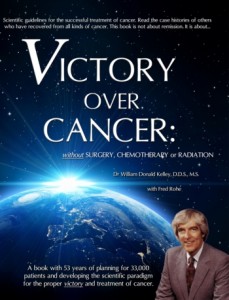
The types of charlatan and fraud Dr. Kelley warned about…
California doctor robbed patients of ‘hopes and dreams of cure’
Herbal cure found to contain beef extract and sunscreen preservative
The “Doctor”
A California doctor who duped patients out of more than $1 million after claiming her herbal supplements could cure cancer has been jailed for 14 years.
Christine Daniel charged patients up to $100,000 for six months of treatment, which she claimed could also cure diabetes and multiple sclerosis.
‘Daniel robbed victims of more than money – she also stole their hopes and dreams for a cure,’ U.S. Attorney Andre Birotte Jr. said after the doctor was sentenced.
The 58-year-old was also ordered to pay back nearly $1.3 million, by U.S. District Judge Robert Timlin, who sentenced her over four counts of mail and wire fraud, six counts of tax evasion and one count of witness tampering.
Do you know the benefits of parsley tea? This was used as one of the common herbal tea remedies in the past. Do you have it growing in your herb garden?
Parsley tea has been used for its therapeutic properties for centuries. The parsley plant, also known as Petroselinum crispus, is the most easily identified of all herbs. It name is from the Greek word meaning “rock celery” (it is a relative of celery).
It can be found in the produce departments around the world. This is probably the most familiar garnish used when plating food. There are two common varieties of parsley, curly and flat leaf (Italian) parsley. The Italian variety is more fragrant and has less bitter taste than the curly variety.
Growing Parsley
Parsley is a bright green biennial herb that develops clusters of yellow flowers from June through August. Parsley has a long taproot, so it needs area that is deep for planting. It requires a location that gets at least six hours of sun and needs mulched and regular deep watering. It does not recover well if left to wilt, so it is important to keep it watered.
Obama won, Obamacare is the law, and, as my wife says, I will just have to learn to dance to a new song.
Now, don’t get me wrong, Obamacare is awful. Forget all the “free stuff” it provides. Children covered on their parents’ plan until 26 years of age? A scam, making young adults — excuse me, children — pay for complete, comprehensive health insurance when all they need and should pay for is major catastrophe insurance. Then there is the “annual ” or “preventative” exam, which according to Obamacare is “free.”
You gotta love this stuff. I wish I had the chutzpah of the people who wrote Obamacare. What they did not tell you, and I am, is that it covers absolutely nothing more than the bare minimum.
Seafood is generally deemed to be healthy; however, a number of popular ones you should avoid at all costs. Prevention magazine reported that the nonprofit Food & Water Watch compiled a list of the 12 least-healthy seafood products; they also note healthier alternatives. It is likely that a number of your favorites are on the list.
Food & Water Watch notes that our oceans have become so depleted of wild fish stocks, and so polluted with industrial contaminants, that trying to figure out the fish that are both safe and sustainable is a daunting task. They note that “Good fish” lists can change year after year, because stocks rebound or get depleted every few years.
Nobody wants to talk about the lethal consequences of the misdiagnosis.
Life being complex, many simple principles turn out on examination to be not as simple as at first thought. For example, everyone knows, or thinks that he knows, that prevention is better than cure. But is it always? It is often very difficult to say with certainty.
Three articles in a recent British Medical Journal tackle the vexed question of mammography, whose purpose is to detect cancer of the breast early in its development on the assumption that early detection leads to more effective treatment. The advice to women, therefore, is to get themselves scanned regularly.
This seems straightforward and commonsensical, but in fact the question of whether the light of mammography is worth its candle is devilishly complex. For example, if the treatment of breast cancer has improved (and death rates in Britain have almost halved between 1990 and 2010, thanks mainly to improved treatment rather than to early finding), then the number of cases found by mammography in order to save a single life has to increase. This in turn means that old trials – and all trials to determine the long-term effect of mammography have to be old – may no longer be relevant to the present situation. Trials of mammography are, in effect, always trying to hit a moving target.
Diet fizzy drinks can raise the risk of diabetes by 60 per cent, startling new research has revealed.
A study of more than 66,000 women found those who drank artificially sweetened drinks were more likely to develop the disease than those who indulged in regular, ‘full fat’ versions.
The findings, published in the American Journal of Clinical Nutrition, fly in the face of conventional thinking that regular versions of fizzy drinks are always worse for our health.
The effect is compounded by the fact that diet drinkers also consume more – on average 2.8 glasses a week compared to 1.6 for regular drinkers.
Regular, full-fat versions of fizzy drinks have previously been linked to an increased risk of diabetes.
But less is known about their artificially sweetened counterparts – often promoted as a healthier substitute.
In the study, more than 66,000 middle-aged French women were quizzed about their dietary habits. Their health was then monitored over 14 years from 1993 to 2007.
The researchers, from the National Institute of Health and Medical Research in France, examined the rates of diabetes among women who drank either regular or diet fizzy drinks and those who drank only unsweetened fruit juice.
Women who drank fizzy drinks had a higher risk of diabetes than those who only consumed juice.
The implosion of the NHS–caused by sclerotic centralized control–continues. Perhaps the biggest scandal in the history of the service has shaken the UK, with thousands allegedly dead due to poor hospital care. From the Telegraph story:
More than 3,000 people may have died unnecessarily at five NHS trusts in a crisis that could dwarf the horrors at Mid Staffordshire, which were detailed in a devastating report on Wednesday. An investigation began on Wednesday night into excessive mortality rates at the five trusts – the same warning sign that exposed the needless deaths of up to 1,200 patients at Mid Staffs.
The trusts in Lancashire, Essex and Greater Manchester have been “outliers” on an index of expected death rates for two successive years to 2012. Within hours of the publication of a report which described the “disaster” at Mid Staffs as the worst scandal in the history of the NHS, the Department of Health released figures which raise the possibility that the “appalling” lack of care may still be going on at hospitals around the country.
Increased power of the healthcare bureaucracy, I believe, leads to lower levels of professionalism, a concern that is validated by the story:
Women stand a better chance of surviving breast cancer if they don’t have a mastectomy, a major study has found.
Those aged over 50 who have only the lump removed, followed by radiotherapy, are almost a fifth more likely to survive the illness than patients who lose the whole breast.
Many women diagnosed with breast cancer choose to have a mastectomy thinking it will remove the tumours as quickly as possible and give them the best chance of survival.
But the results of a ten-year research project by academics show that a less radical form of treatment – breast conservation surgery – is more effective.
It involves taking away the affected lump and then administering high doses of radiotherapy over a course of five or six weeks to ensure any remaining cancerous cells are killed.
Researchers from Duke University in North Carolina looked at the records of 112,154 women diagnosed with breast cancer between 1994 and 2004.
Around 55 per cent had breast conservation surgery and 44 per cent had a mastectomy.
The study, published in the journal Cancer, shows that women who had breast conservation surgery were 13 per cent more likely to survive the illness. But the results were even more promising in women over 50 whose survival odds were 19 per cent higher than those who had mastectomies.
Schoolboy invents early test for pancreatic cancer that killed Steve Jobs
Jack Andraka’s new test detects pancreatic cancer earlier than any other
Deadly disease currently kills 19 out of 20 within five years
He claims his invention could raise survival rates to ‘close to 100 per cent’
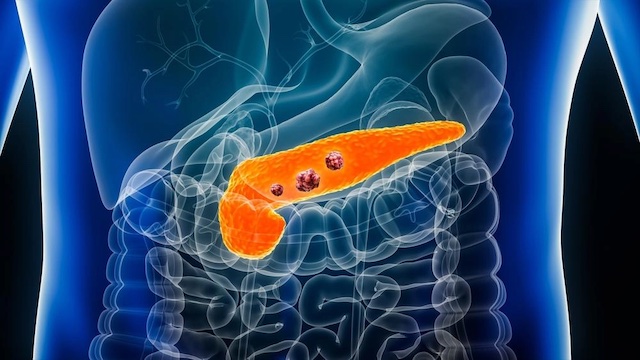
A 15-year-old schoolboy could save millions of lives after he invented a new, low-cost test that can detect the early stages of a deadly form of cancer.
Jack Andraka from Crownsville, Maryland, developed a simple dip-stick test for levels of mesothelin, a biomarker for early stage pancreatic cancer found in blood and urine.
It promises to revolutionise treatment of the disease, which currently kills 19 out of 20 sufferers after five years – largely because its so difficult to detect until its final stages.
Jack’s invention, for which he was last month awarded the grand prize of $75,000 in scholarship funds at the 2012 Intel Science Fair, means that patients now have a simple method to detect pancreatic cancer before it becomes invasive.
His novel patent-pending sensor has proved to be 28 times faster, 28 times less expensive, and over 100 times more sensitive than current tests.
Thanks to the test, pancreatic cancer patients could now get an early earning to seek medical help when it still has a chance of working, which could, he claims, potentially bump up survival rates to ‘close to 100 per cent’.
Three recent studies published in the journals Nature and Science shed new light on why chemotherapy, a common conventional treatment for cancer, is typically a complete failure at permanently eradicating cancer. Based on numerous assessments of how cancer cells multiply and spread, researchers from numerous countries have confirmed that cancer tumors generate their own stem cells, which in turn feed the re-growth of new tumors after earlier ones have been eliminated.
In one of the studies published in the journal Nature, researcher Luis Parada from the University of Texas (UT) Southwestern Medical Center in Dallas and his colleagues decided to investigate how new tumors are able to re-grow after previous ones have been wiped out with chemotherapy. To do this, Parada and his team identified and genetically labeled cancer cells in brain tumors of mice before proceeding to treat the tumors with conventional chemotherapy.
If you are what you eat, and you regularly eat meat that comes from animals that were depressed and stressed their whole lives, do you then live depressed and stressed? Conversely, if you eat vegetables which grow bountifully in nutrient and mineral rich soil, vegetables never sprayed with pesticides or insecticides, are you then a nutrient rich and “bountiful” person?
The U.S. drought is quickly wiping out up to 80 percent of the corn, soy and beet production in the United States, but those foods, IF NOT ORGANIC, cause disease and sickness anyway, because they are genetically modified, doused with pesticides, OVER AND OVER, and then processed with more chemicals in a laboratory, where money rules and health has no value. (http://www.organicconsumers.org/monsanto/index.cfm)
Beets are used to make monosodium glutamate, and GMO corn meal is fed to cattle, which destroys their digestive track and puts them in need of high doses of antibiotics – ones that the public, in turn, consumes regularly! It’s a vicious cycle. It’s time to ignore what the media is telling you, and consider that the drought is a blessing in disguise.
Smart meters—utility meters that use radio frequencies (RF) to report data to utility offices for billing and other purposes—may be harmful to your health.
Just ask Joe Esposito, on whose home the Public Service Company of Oklahoma slapped a smart meter despite his explicit wishes it not be installed. Shortly after installation, Esposito began to experience tooth aches, constant tingling, and aches in his leg that kept him from sleeping. After watching a video by Dr. Dietrich Klinghardt called “Smart Meters & EMR: The Heath Crisis of Our Time,” Esposito put up lead sheeting around the meter. He began immediately to sleep well, to feel no pain in his leg, and relief from his other symptoms. He even experimented on himself by removing the lead once in a while, noting that the pains and sleeplessness returned upon doing so.
Many professionals in restaurants and eateries are using or consuming the entire lemon and nothing is wasted. How can you use the whole lemon without waste?
Simple.. place the washed lemon in the freezer section of your refrigerator. Once the lemon is frozen, get your grater, and shred the whole lemon (no need to peel it) and sprinkle it on top of your foods.
Sprinkle it to your vegetable salad, ice cream, soup, cereals, noodles, spaghetti sauce, rice, sushi, fish dishes…. the list is endless.
All of the foods will unexpectedly have a wonderful taste, something that you may have never tasted before. Most likely, you only think of lemon juice and vitamin C. Not anymore.
Now that you’ve learned this lemon secret, you can use lemon even in instant cup noodles.
What’s the major advantage of using the whole lemon other than preventing waste and adding new taste to your dishes?
Well, you see lemon peels contain as much as 5 to 10 times more vitamins than the lemon juice itself.
The ill-effects of sugary soft drinks has been well documented but new research continues to show just how bad such beverages can be for you, especially over the long term. Now, according to a just-released Swedish study, drinking even one normal-sized soda per day can boost a man’s chances of developing more aggressive forms of prostate cancer.
“Among the men who drank a lot of soft drinks or other drinks with added sugar, we saw an increased risk of prostate cancer of around 40 percent,” said Isabel Drake, a PhD student at Lund University, according to Agence France Presse.
The study, which will be published in the upcoming edition of the American Journal of Clinical Nutrition, followed more than 8,000 men aged 45 to 73 for about 15 years on average. Those who drank one 11-fluid-ounce (330 ml) soft drink per day were 40 percent more likely to develop the more serious forms of prostate cancer that ultimately required treatment.
The cancer among the study’s all-male participants was discovered after they showed symptoms of disease, not through a screening process known as Prostate-Specific Antigen (PSA).
Once again, the penny pinching bureaucrats running Great Britain’s National Health Service, notable for a euthanasia program that kills 130,000 people a year, may be responsible for creating yet another unhealthy environment for British subjects.
In this case, British dentists have been warned against using a cheap, hand-held x-ray machine on their patients because they pose a significant health risk.
According to the BBC, the imported machines, known as the Tianjie Dental Falcon, expose “users and patients to 10 times the normal level of radiation, increasing their risks of cancer and organ damage.”
Doctors and dentists in such chronically underfunded, government-run health care systems are always looking for ways to curb costs. In this case, it seems as though one cost-cutting measure has been hurting the very patients they were caring for. But other bureaucrats from the Medicines and Healthcare Regulatory Agency are now asking NHS, as well as private dentists, to get rid of the devices.
Entire skull irradiated
In assessing the damage so far, officials have had to admit they don’t know how many patients have been exposed to the additional risk. So far, 13 of the Chinese-made devices have been seized at a distribution center. Most were sold on Internet sites including eBay, the BBC said. At least one dental surgery office was found to be using the dangerous device.
What shelf stable item can be used (nutritiously) in place of butter, shortening, and cooking oil, and then pressed into duty as a health and beauty aid?
Coconut oil!
One of my favorite pantry items is my big jar of organic virgin coconut oil, and the crazy thing is, I don’t even like coconuts. If you slip me a cookie that has those nasty little flakes of coconut in them, I’ll probably spit it out – I really, emphatically don’t like coconut! I am stressing this point because coconut oil has a place in the kitchen of even the most die-hard coconut hater (like me!).
Sometimes people who are seeking a healthier lifestyle make the mistake of avoiding all fats. Sure, eating a bag of Doritoes covered in cheese is terrible for you (in more ways than just the fat content!) – but certain fats can be a healthy, and very necessary, part of your diet. In fact, these “healthy fats” can actually aid in weight loss, if that is your goal. Some examples of these healthy fats would be those from nuts, avocados, seeds, certain fish, and coconut oil. Consumption of these fats will improve your hair, your skin, your immune system, and your organ function when consumed in moderate quantities. As well, certain nutrients are fat soluble and can only be properly used by your body in the presence of fat. For example, Vitamins A, D, E, and K should be taken when you eat a small amount of fat.
All coconut oils are not created equally. There are a few basic types of coconut oil, and it’s important to get the “right” kind for your needs in order to reap the full benefits of your purchase.
Three years ago, Dr. Keith Smith, co-founder and managing partner of the Surgery Center of Oklahoma, took an initiative that would only be considered radical in the health care industry: He posted online a list of prices for 112 common surgical procedures. The 51-year-old Smith, a self-described libertarian, and his business partner, Dr. Steve Lantier, founded the Surgery Center 15 years ago, after they became disillusioned with the way patients were treated at St. Anthony Hospital in Oklahoma City, where the two men worked as anesthesiologists. In 1997, Smith and Lantier bought the shell of a former surgical center with the aim of creating a for-profit facility that could deliver first-rate care at a fraction of what traditional hospitals charge.
The major cause of exploding U.S. heath care costs is the third-party payer system, a text-book concept in which A buys goods or services from B that are paid for by C. Because private insurance companies or the government generally pick up most of the tab for medical services, patients don’t have the normal incentive to seek out value.
The Surgery Center’s consumer-driven model could become increasingly common as Americans look for alternatives to the traditional health care market—an unintended consequence of Obamacare. Patients may have no choice but to look outside the traditional health care industry in the face of higher costs and reduced access to doctors and hospitals.